Whole Milk vs Skim Milk: Which Is Best for Weight Loss?
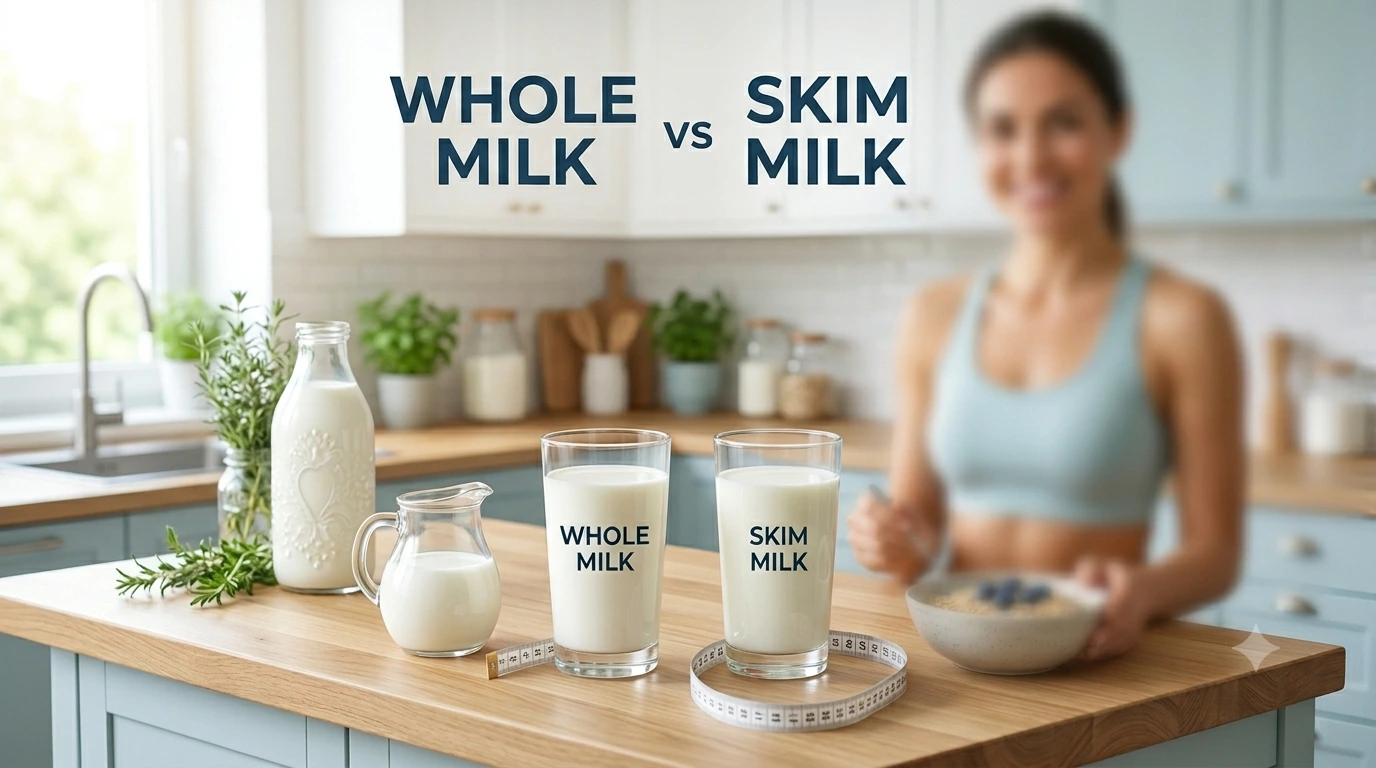
Is whole milk vs skim milk better for body composition? Dive into modern whole milk nutrition facts and the biological dairy matrix. Even though whole fat milk calories are higher, clinical trials suggest full-fat dairy optimizes satiety and metabolism. Uncover why is whole milk better than skim milk and identify the best milk for weight loss.
Deciding between whole milk vs skim milk has moved beyond simple calorie counting. While whole fat milk calories are higher, current research into whole milk nutrition facts focuses on the "dairy matrix"—the physical structure of milk that affects how our bodies process energy. Clinical reviews suggest that full-fat dairy is not associated with increased body fat and may even be linked to a lower risk of obesity [1].
These findings often lead consumers to ask: why is whole milk better than skim milk? Part of the answer lies in satiety, or the biological feeling of being full, which helps prevent overeating [2]. Consequently, some evidence suggests that whole dairy may be a strategic choice for the best milk for weight loss because of its superior ability to regulate appetite compared to non-fat alternatives [3].
Does Skim Milk Spike Insulin More Than Whole Milk?
Whole milk retains its natural lipids, which slow down gastric emptying, or the rate at which food leaves the stomach. When skim milk is consumed, the absence of fat permits rapid transit through the stomach into the small intestine. This accelerated digestion causes lactose, the natural sugar found in milk, to be broken down and absorbed quickly. This can lead to a faster rise in blood glucose (blood sugar) and a corresponding insulin spike. Whole milk, by contrast, blunts this glycemic response (the rise in blood sugar after eating) because fat acts as a natural brake on glucose absorption [4].
Furthermore, this difference in digestion speed directly influences lipid metabolism (how your body processes and stores fat). The milk fat globule membrane (MFGM)—the protective layer surrounding the fat droplets in whole milk—is completely destroyed during the skimming process. Modern clinical trials demonstrate that the intact MFGM in whole milk helps regulate cholesterol absorption. [5]
- Whole Milk: Slows down your digestion, creates stable blood sugar curves, and triggers the release of fullness hormones.
- Skim Milk: Passes rapidly into your system, creating faster insulin spikes but saving you roughly 66 calories per cup.
The Calcium Soap Effect: Why Your Body Absorbs Fewer Whole Milk Calories
A major oversight in standard caloric evaluations is the assumption that the human body absorbs 100% of the energy consumed. In the gut, dairy presents a unique biochemical phenomenon known as saponification, or calcium soap formation.
Milk provides a high concentration of both elemental calcium and long-chain saturated fatty acids. When whole milk reaches the alkaline environment of the small intestine, ionized calcium binds directly to these unabsorbed free fatty acids. This chemical reaction creates insoluble soap-like complexes—solid, microscopic compounds that the human digestive tract cannot break down or absorb [6].
Because these calcium soaps cannot cross your intestinal walls, they block a distinct portion of the fat from entering your body. When calculating the calories in whole milk (1 cup contains about 149 calories), a meaningful fraction passes straight through your digestive system unabsorbed. This means the actual net energy your body stores is lower than the calorie counts listed on standard food labels. Because skim milk lacks these fatty acids, it cannot trigger this specific type of caloric discounting.
Metabolic Burn: How Dairy Proteins Keep You Burning Calories
Beyond fat content, milk is highly efficient at stimulating the thermic effect of food (TEF), which is the temporary increase in metabolic rate that occurs as your body expends energy to digest, absorb, and process nutrients. Both choices deliver approximately 8 grams of high-quality protein per cup, consisting of 20% whey and 80% casein.
Digesting protein requires significantly more metabolic energy than processing carbohydrates or fats. Your body uses a significant amount of energy simply breaking down protein into usable amino acids. In fact, your metabolism expends up to 20% to 30% of protein's total calories just to digest it, effectively boosting your metabolic rate automatically after you drink it [7]. Casein, a slow-digesting protein, forms a physical gel clot in the low-pH environment of the stomach. This clot ensures a slow, continuous delivery of amino acids into the bloodstream over several hours. This prolonged supply supports muscle protein synthesis (muscle repair and development), which helps preserve lean muscle mass—the primary driver of your basal metabolic rate, or the baseline calories your body burns at rest.
Micronutrient Bioavailability Beyond the Macro Label
The removal of fat also creates a notable gap in micronutrient bioavailability, which refers to how efficiently your body can absorb and utilize vitamins and minerals. Vitamins A and D are fat-soluble, meaning they require dietary lipids to cross the intestinal lining and enter your circulation.
In whole milk, these essential vitamins are naturally dissolved inside lipid droplets, facilitating optimal absorption. When dairy fat is skimmed away, these native vitamins are removed along with it. Although manufacturers fortify skim milk by adding synthetic versions of vitamins A and D back into the liquid, the lack of a fat delivery vehicle in the glass reduces the intestinal absorption efficiency of these nutrients [8]. Vitamin D deficiency is highly correlated with metabolic dysfunction and systemic inflammation, both of which are independent drivers of long-term weight gain.
Where Does 2% Reduced-Fat Milk Fit Into Weight Loss?
Many American consumers treat the dairy aisle as a strict binary choice between whole fat and completely fat-free. However, 2% reduced-fat milk occupies the vast middle ground. To understand how these choices stack up, it helps to examine their nutritional differences directly:
| Milk Type (1 Cup / 8 oz) | Calories | Total Fat | Carbohydrates (Lactose) | Protein |
|---|---|---|---|---|
| Whole Milk | ~149 | 8g | 12g | 8g |
| 2% Reduced-Fat Milk | ~122 | 5g | 12g | 8g |
| Skim Milk | ~83 | 0g | 12g | 8g |
From a metabolic perspective, 2% reduced-fat milk acts as a practical compromise. It retains enough lipids (5 grams) to maintain partial gastric slowing—the delay of food leaving the stomach—and allows for a moderate level of calcium soap formation to reduce total fat absorption [10]. For individuals who find the higher caloric load of full-fat dairy restrictive but experience rapid hunger after drinking skim milk, 2% milk provides a reliable middle tier that stabilizes the digestive timeline without over-allocating daily energy budgets [10].
Does the Sugar in Skim Milk Cause Belly Fat?
A frequent concern among health-conscious consumers is whether stripping the fat from dairy turns skim milk into a high-glycemic beverage that triggers abdominal fat storage. All unflavored cow's milk contains roughly 12 grams of lactose (natural milk sugar) per cup, regardless of the fat content [9]. The core difference lies in how your metabolism handles that sugar when fat is entirely absent.
In skim milk, the lack of a fat buffer causes the stomach to pass its contents rapidly into the small intestine, leading to a quick breakdown of lactose into glucose and galactose. This can cause a swift uptick in blood glucose and a subsequent insulin spike [9]. Because insulin is a storage hormone, large, repeated insulin spikes in the absence of physical activity can favor fat storage. However, clinical studies show that skim milk alone does not selectively create belly fat unless consumed as part of a chronic caloric surplus [9]. Rather than directly creating fat, its main drawback is the lack of metabolic stabilization, which can leave you feeling hungry sooner and trigger subsequent cravings later in the day.
Is Grass-Fed or Organic Whole Milk Better for Metabolic Health?
When evaluating whole dairy, the origin of the fat makes a profound difference in how your body handles lipids. Standard conventional whole milk typically comes from grain-fed cattle, whereas certified grass-fed and organic whole milk comes from pasture-raised cows. This environmental difference drastically changes the chemical structure of the milk fat itself [11].
Peer-reviewed lipid analyses show that grass-fed whole milk contains up to 147% more Omega-3 polyunsaturated fatty acids and significantly higher levels of Conjugated Linoleic Acid (CLA) than conventional dairy [11]. In human metabolic pathways, CLA acts as a natural activator for specific protein signaling pathways that upregulate fatty acid oxidation, which is the biological breakdown and burning of stored fats [12]. Furthermore, the optimized Omega-3 to Omega-6 ratio in pasture-raised dairy suppresses low-grade systemic inflammation in fat tissue, improving overall insulin sensitivity and protecting metabolic health far better than grain-fed alternatives [12].
What Should You Buy? The Real-World Grocery Guide
To maximize your metabolic health and weight loss, follow these direct buying rules based on your specific health goals:
- Choose Whole Grass-Fed Milk if: Your primary struggle is managing continuous appetite cravings, or you want to maximize your intake of anti-inflammatory Omega-3 fatty acids and natural fat-burning CLA [11, 12].
- Choose 2% Reduced-Fat Milk if: You want a solid compromise. It provides enough fat to slow your digestion and prevent rapid hunger spikes while keeping your total daily calorie target low [10].
- Choose Skim Milk if: You follow a strict calorie budget, easily get your daily healthy fats from sources like avocados and nuts, and only use milk as a quick post-workout protein source.
My Experience with Whole Milk During Weight Loss: A Real-World Case Study
Applying these biochemical principles to everyday lifestyle modifications, I successfully transitioned from a starting weight of 291 pounds (132 kg) to a sustained 187 pounds (85 kg) while regularly consuming whole milk and full-fat dairy. Crucially, these options did not independently cause weight loss; instead, they were strictly factored into a structured, calorie-controlled diet tailored to my broader macronutrient targets. Under the supervision of my physician, accounting for whole fat milk calories provided the necessary dietary satiety to comfortably maintain an extended caloric deficit over time. Furthermore, ensuring a steady intake of healthy dietary lipids supported overall nutritional adequacy, helping my face and skin retain a healthy appearance rather than looking overly gaunt during the fat-loss phase. While individual results vary and personal anecdotes should never replace peer-reviewed science or professional medical advice, this experience demonstrates how the dairy matrix can practically align with long-term weight management.
Medical Disclaimer: This article provides evidence-based scientific analysis for informational purposes only. It does not replace professional medical advice. If you have a diagnosed milk allergy or lactose intolerance, consult a medical professional before modifying your dairy intake.
References
[1] The relationship between high-fat dairy consumption and obesity, cardiovascular, and metabolic disease , DOI: 10.1007/s00394-012-0418-1 PMID: 22810464 , 2013 Feb
[2] Milk and dairy products: good or bad for human health? An assessment of the totality of scientific evidence , doi: 10.3402/fnr.v60.32527 PMCID: PMC5122229 PMID: 27882862 , 2016 Nov 22
[3] Milk and dairy products: good or bad for human health? An assessment of the totality of scientific evidence , PMID: 27882862 PMCID: PMC5122229 DOI: 10.3402/fnr.v60.32527 , 2016 Nov 22
[4] Milk consumption and multiple health outcomes: umbrella review of systematic reviews and meta-analyses in humans , PMCID: PMC7789627 PMID: 33413488 doi: 10.1186/s12986-020-00527-y ,2021 Jan 7
[5] Milk Fat Globule Membrane Is Associated with Lower Blood Lipid Levels in Adults: A Meta-Analysis of Randomized Controlled Trials, PMCID: PMC11394670 PMID: 39272491 , 2024 Aug 28
[6] Milk nutritional composition and its role in human health , PMID: 24800664 DOI: 10.1016/j.nut.2013.10.011 , 2014 Jun
[7] A high-protein diet for reducing body fat: mechanisms and possible caveats , PMCID: PMC4258944 PMID: 25489333 doi: 10.1186/1743-7075-11-53 , 2014 Nov 19
[8] Removal of fat from cow's milk decreases the vitamin E contents of the resulting dairy products, PMID: 26016854 DOI: 10.1007/s11745-001-0670-3 , 2001 Jan
[9] Skim milk, whey, and casein increase body weight and whey and casein increase the plasma C-peptide concentration in overweight adolescents , PMID: 23077192 DOI: 10.3945/jn.112.161208 , 2012 Dec
[10] The Role of Dairy Products in Healthy Weight and Body Composition in Children and Adolescents , PMCID: PMC3267168 PMID: 22299005 ,2011 Feb
[11] The “Grass-Fed” Milk Story: Understanding the Impact of Pasture Feeding on the Composition and Quality of Bovine Milk , PMCID: PMC6723057 PMID: 31426489 ,2019 Aug 17
[12]Milk Fatty Acid Profiles in Different Animal Species: Focus on the Potential Effect of Selected PUFAs on Metabolism and Brain Functions , PMCID: PMC8066999 PMID: 33800688 ,2021 Mar 28
How we reviewed this article
Sources
Our experts continually monitor the health and wellness space, and we update articles when new information becomes available.
Current Version
June 11, 2026
Written By
Nour Hany
Edited By
KirolosReda
Medically Reviewed By
DR. Rania Elserafy
[/custom-html]
![Why Am I In A Calorie Deficit And Gaining Weight? [Fix]](https://wellness.culinarycreationss.com/storage/health-and-nutrition-1/why-am-i-in-a-calorie-deficit-and-gaining-weight-fix/4a48e795-580b-4097-aae8-42ae368bde7a.webp)

Leave a comment
Your email address will not be published. Required fields are marked *