
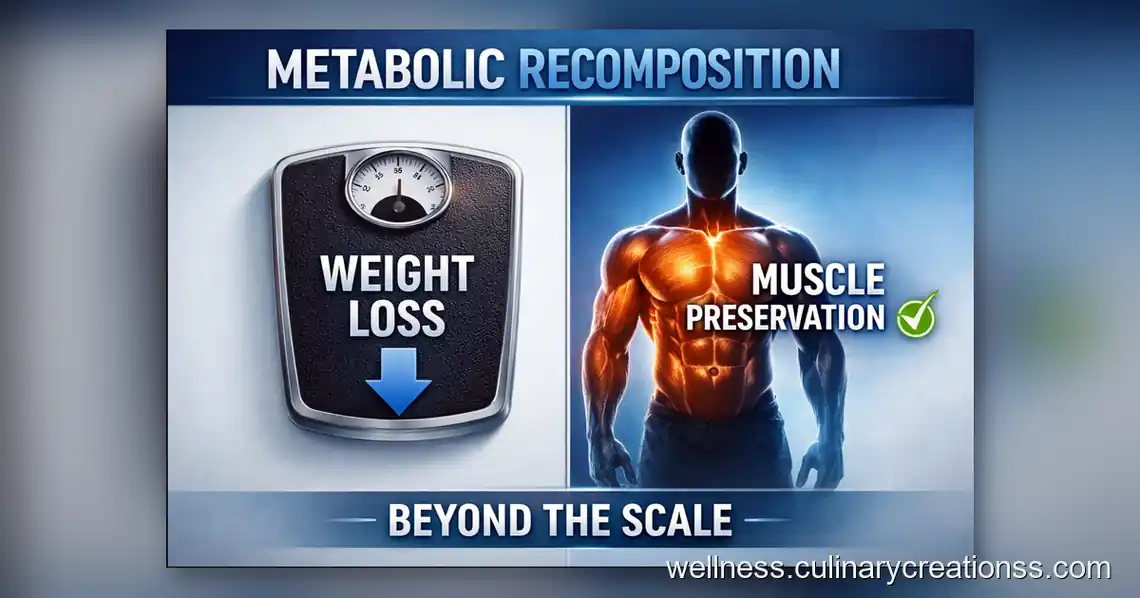
Beyond Ozempic Face: How to Stay Strong in 2026
Real talk: the 2026 weight loss era is about metabolic vibes, not just the scale. Are you on a GLP-1 but worried about 'Ozempic face' or losing muscle? It’s time to pivot to metabolic optimization. Master protein pacing, the 12-3-30 workout, and DXA scans to protect your lean mass. Stop dieting and start recomposing for a stronger you.
Look, we have officially entered a new era of metabolic vibes where the old-school obsession with the number on your bathroom scale is, frankly, dead. In 2026, the American public isn't just trying to "lose weight"; we are pivoting toward "metabolic optimization," and the science is getting heavy. No cap, with roughly 1 in 8 US adults having hopped on the GLP-1 (Glucagon-like peptide-1) bandwagon, the conversation has moved from simple caloric deficits to the high-stakes world of clinical body composition.
The "Skinny"—the real tea—is that the "skinny" goal is being replaced by the "functional" goal. Let’s be real: nobody wants to fall into the trap of sarcopenic obesity . That’s the medical nightmare where you look thin on the outside but your metabolic engine is essentially running on empty because you’ve torched your muscle mass instead of your fat. We’ve all seen the ozempic face before and after photos, and it’s legitimately terrifying to see that gaunt, hollowed-out ozempic face that screams "nutrient deficiency" rather than “health transformation.”
If you are successfully silencing the food noise (those constant, intrusive thoughts about eating) but failing at muscle preservation , you are essentially setting yourself up for a metabolic rebound. Whether you are grinding out a 12 3 30 treadmill session or waiting on your latest body spec dexa scan results, the objective in 2026 is clear: we need to stop "dieting" and start "recomposing." This article is your clinical deep-dive into why advanced strategies like protein pacing and the anatomical precision of a dxa scan (Dual-energy X-ray Absorptiometry) are the only ways to navigate this pharmacological revolution without losing the very tissues that power your life.
The GLP-1 Dilemma and Athletic Performance: The Lean Mass Crisis
The rise of medications like Ozempic, Wegovy, and Zepbound is the most significant and confusing topic for American athletes today. Here’s where things get a little tricky, and frankly, a lot of folks are scratching their heads. While these drugs are unprecedented in reducing adipose (fat) tissue, clinical data shows that up to 40% of weight lost can come from lean mass. This loss represents a major crisis because it lowers your RMR (Resting Metabolic Rate—the calories your body burns just staying alive), creating a "Metabolic Rebound Effect" if the medication is discontinued.
The confusion lies in the drug's mechanism; by slowing gastric emptying and signaling extreme satiety to the brain, it makes consuming enough protein a daily challenge. The traditional "calories-in vs. calories-out" model is dead. It's been replaced by "Weight Loss Quality," where maintaining muscle is the primary pillar of metabolic health.
Metric | Traditional Dieting | GLP-1 Induced Weight Loss |
|---|---|---|
Lean Mass Loss % | 20% - 30% | 25% - 40% |
Impact on Appetite | Increased Hunger Hormones | Sharp, Sustained Decrease |
Gastric Emptying | Normal | Significantly Delayed |
Risk of Sarcopenia | Moderate | High (Especially in Seniors) |
Molecular Mechanisms of Muscle Wasting under GLP-1
Advanced research indicates that muscle loss involves a crossover in cellular signaling pathways. While exercise activates the Akt/mTOR (Mammalian Target of Rapamycin) pathway for growth, extreme energy deficits from GLP-1 may downregulate this and upregulate catabolic pathways like the "Ubiquitin-Proteasome" system. Americans are searching for the "insider secret" on how to keep these growth pathways open; the answer lies in high-intensity resistance training paired with “Strategic Protein Timing.”
The Protein Timing Revolution and the Leucine Threshold
In an era of American protein-maxing—we've all seen that guy at the gym chugging his third shake before noon—a game-changing study in Nature Metabolism (Feb 2024) revealed that excess protein (over 22% of daily calories) might not offer muscle benefits and could increase atherosclerosis risks. The "Quality" and "Timing" of protein are more critical than the total count.
The Leucine Threshold Concept
The secret searched for by professionals is reaching the leucine threshold in every meal. Leucine is the "master switch" amino acid that activates MPS (Muscle Protein Synthesis). Data suggests 2.5 to 3 grams of Leucine per meal are required to trigger this response. For GLP-1 users with low appetite, this is the ultimate "lowdown": hitting that threshold with minimal food volume using "Hydrolyzed Proteins" or concentrated isolates.
Protein Source | Amount to Reach Leucine Threshold (2.5g) | Total Protein Content |
|---|---|---|
Whey Protein Isolate | ~ 25g | 20 - 25g |
Chicken Breast | ~ 120g | 30 - 35g |
Large Eggs | ~ 5 - 6 eggs | 30 - 36g |
Pea Protein | ~ 35 - 40g | 30 - 40g |
The Dopamine Mystery: Why Americans are Losing Gym Motivation
A major "confusing" trend in US search data is "Exercise Anhedonia" or sudden lethargy. Research suggests these drugs may cause "Reward Blunting." Because they inhibit dopamine in the Nucleus Accumbens (the brain's reward center), they may also reduce the drive for other rewarding activities, like exercise.
Remember those days when hitting the gym felt like a natural high? For some on GLP-1s, that "high" can feel muted. It's not you; it's a real neurological shift. Gym consistency must transition from "Natural Motivation" to "Disciplined Routine." Use "Goal-Based Training" to force a dopamine response, focusing on resistance exercises that release IL-6 (Interleukin-6) as a "Myokine" to improve mood.
The Gut-Muscle Axis: The New Frontier of Performance
The relationship between the microbiome and muscle strength—the gut muscle axis —is one of the rarest pieces of info in 2025. GLP-1 drugs alter the gut environment by slowing motility, which impacts the production of SCFAs (Short-Chain Fatty Acids) like “Butyrate.”
The "bottom line" here is that gut health determines protein efficiency. Healthy gut bacteria produce molecules that prevent muscle inflammation. Consequently, American athletes are now embracing "fiber-maxxing," integrating "Resistant Starch" and "Acacia Fiber" to boost Butyrate production, acting as a shield against muscle wasting.
The 12-3-30 Treadmill Workout: Science vs. Hype
The 12 3 30 treadmill workout—walking at a 12% incline at 3 mph for 30 minutes—is a viral powerhouse. But the real "Clinical Scoop" comes from a first-of-its-kind study (Feb 2026) comparing it to running.
The Findings: When matched for calories burned, the 12-3-30 burned a higher percentage of fat (41%) compared to running ( 33%). While it takes longer, for GLP-1 users, the lower joint impact and higher fat utilization make it the "smarter" choice for protecting muscle while shedding fat.
Contradictions in the 2025-2030 US Dietary Guidelines
The new Dietary Guidelines have caused widespread confusion. The contradiction lies in highlighting animal products (rich in saturated fats) while recommending keeping saturated fat below 10%. Americans are left wondering: how do we get the protein without spiking "Bad Cholesterol" (LDL )? Experts suggest focusing on "High-Quality Protein" like fish and legumes with "Nutrient Density" and measured complex carbs for “Protein Sparing.”
Advanced Supplementation for the Modern Metabolism
Creatine is no longer just for bodybuilders; it’s a "Global Health Supplement" for cognitive performance and bone density. Meanwhile, "Collagen" is vital for protecting tendons that may weaken during rapid weight loss. The "Pro Protocol" for collagen is consuming it with Vitamin C 60 minutes before training.
Supplement | Strategic Benefit for GLP-1 Users | Recommended Dosage (Pro Protocol) |
|---|---|---|
Creatine Monohydrate | Prevents Strength Loss, Cognitive Support | 3 - 5g daily (Continuous) |
Hydrolyzed Collagen | Protects Ligaments, Prevents Sagging Skin | 10 - 15g before Resistance Training |
Whey Isolate | Reaches Leucine Threshold with Low Volume | 25 - 30g Post-Workout |
Omega-3 (High EPA) | Reduces Muscle Inflammation | 2 - 3g daily |
Beyond the Ozempic Face: Metabolism and Social Identity
Let’s be honest: the gaunt ozempic face is not a side effect of the drug, but a sign of "Micronutrient and Protein Malnutrition." During rapid loss, the body prioritizes vital organs, leaving hair and skin last. The psychological "lowdown" is focusing on Performance Metrics (how much you lift) rather than Aesthetic Metrics (how you look) to ensure long-term mental health.
Strategic Conclusions: The Ultimate Bottom Line
Muscle is Metabolic Currency: Use dxa scan technology or a body spec dexa scanto track "Weight Quality," not just weight loss.
Protein Quality over Quantity: Masterprotein pacing and hit the 3g leucine threshold in 4-5 distributed meals.
The Gut Axis is the Controller: Embrace fiber-maxxing. Resistant starch is essential to Butyrate production.
Manage Reward Blunting: Expect motivation to drop. Use routine to compensate.
The ultimate challenge for Americans today is not "how to lose weight," but "how to stay strong" while losing it. Next time you step on that scale, ask yourself: Am I just losing weight, or am I truly building a stronger, more resilient metabolic engine? Resistance-based exercise and strategic protein pacing are the only guarantees for a sustainable transformation in 2026.
References
The New England Journal of Medicine (NEJM) - STEP 1 Trial Study
Nature Metabolism - High Protein Intake and Atherosclerosis Risk (Feb 2024)
Cell Metabolism - Muscle Strength vs. Organ Mass Loss (Aug 2025)
International Journal of Exercise Science (PMC) - 12-3-30 Metabolic Responses (Feb 2026)
Int J Exerc Sci. 2025 Jan 1;18(6):56–64. doi: 10.70252/UBIX591
Frontiers in Microbiology - The Gut-Muscle Axis & Butyrate (Oct 2025)
American Psychological Association (APA) - Mental Health Effects of GLP-1 (July 2025)
Harvard T.H. Chan School of Public Health - Dietary Guidelines 2025-2030 Analysis
National Institutes of Health (NIH/PMC) - Protein Pacing for Muscle Retention (2025)
SAGE Open Med Case Rep. 2025 Oct 16;13:2050313X251388724. doi: 10.1177/2050313X251388724
World Journal of Diabetes - Saving Muscle While Losing Weight on GLP-1s (Sept 2025)
How we reviewed this article
Sources
Our experts continually monitor the health and wellness space, and we update articles when new information becomes available.
Current Version
February 28, 2026
Written By
Nour Hany
Edited By
Kirolos Reda
Medically Reviewed By
Dr. Rania Elserafy
Reviewed by Certified Fitness Coach
Coach Riham Hamouda
Leave a comment
Your email address will not be published. Required fields are marked *